
Dialogue session in As-Suwayda explored women’s reality and social changes
Addressing various forms of violence, women’s relationship with the law, and the evolution of their role in society
ROCHELLE JUNİOR
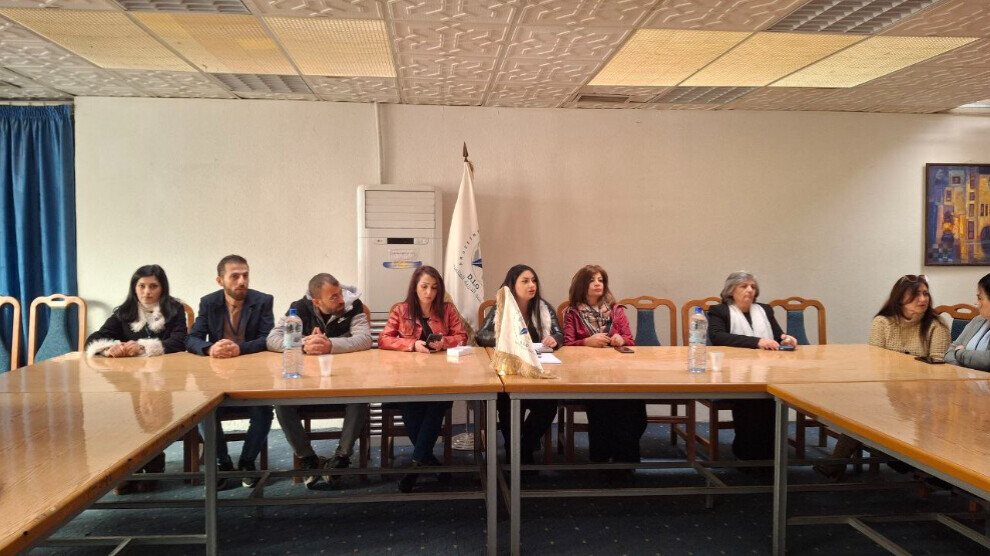
As-Suwayda — A dialogue session titled “Women Between Yesterday and Today: A Journey of Cultural and Social Transformation” featured diverse interventions emphasizing the importance of dialogue and transparency. Participants also proposed practical and legal solutions to strengthen women’s status and safeguard their rights amid ongoing challenges.
The World Druze Organization, in cooperation with the Syrian Women’s Council, organized a dialogue session on Monday, December 8, in the city of As-Suwayda. The session tackled key issues affecting women, including various forms of violence and ways to combat them through legal reform, the challenges posed by tribal and clan structures, and a theatrical performance illustrating different types of violence—particularly emotional abuse that can lead to tragic outcomes.
Participants discussed three main topics central to the reality of Syrian women: violence against women, the relationship between women and Syrian law, and the evolution of women’s roles in As-Suwayda over the past decade. These themes aimed to paint a comprehensive picture of the social and cultural transformations that Syrian women are undergoing today.
Dialogue as a Fundamental Pillar
Walaa Taj al-Din, Director of the World Druze Organization’s office in As-Suwayda, emphasized during the session—held as part of the 16 Days of Activism Against Gender-Based Violence—the pivotal role women play in society, noting that they have always been the core of its strength and cohesion.
She explained that the session’s goal was to deliver a clear message about women’s journey in the city—from past to present and toward the future—while stressing the need to provide greater safety and empower women to play an active social role.
She highlighted that dialogue is the essential foundation of such events, especially among youth, as it helps shape practical solutions that enhance women’s presence and strengthen their ability to confront existing challenges. Taj al-Din added that these discussions aim to develop mechanisms ensuring women a representative position within the law and expanding their opportunities for leadership and participation.
She also addressed the recent situation of women in As-Suwayda, who have faced various forms of psychological and physical violence, along with kidnapping incidents linked to extremist ideologies. She stressed that although the kidnapped women have shown strength and resilience, the core problem lies in the external ideology imposed upon them.
She concluded by underscoring the need for solutions that ensure greater safety for women during times of conflict, reinforcing their active and vital role in society.
Forms of Violence and Violations Faced by Women
Lawyer and women’s and children’s rights activist Maha Masoud explained that the session addressed various forms of violence experienced by women in the city—whether psychological, behavioral, or verbal—alongside the harsh circumstances many women in As-Suwayda recently endured, including kidnapping, rape, displacement, and forced residence in shelters.
Masoud emphasized the importance of the session, describing it as a fundamental step toward discussing issues with high transparency. She noted that such topics were previously discussed timidly or only theoretically, without translating into actionable steps. What distinguished this session, she said, was the seriousness in seeking realistic solutions and the courage to speak openly about the challenges facing women.
Masoud highlighted the importance of transforming women’s initiatives into tangible practical solutions through individual efforts and joint work with activists to provide safe spaces for abused women. She expressed hope that these dialogue efforts would be accompanied by supportive legal measures, reflecting greater maturity in addressing women’s issues—once considered socially sensitive.
She concluded by stressing the need for such dialogue sessions to include all groups of women, especially marginalized women who face these issues directly, so they may have wider opportunities to participate in discussions and shape solutions.
Key Social and Legal Pillars
Participant Deema Hneidi stated that the session was valuable and that the outcomes of such dialogues depend on awareness and constructive discussion, which were clearly present.
She noted that the main pillars requiring focus are the law, social systems in both community and civil environments, and the family—considering these as the core foundations for any serious effort to achieve real progress for women and society.
Meanwhile, Basma Qar’ouni, representative of the Syrian Women’s Council in As-Suwayda, said that the discussions were characterized by a high level of transparency and comfort, with participants exchanging opinions and proposing future solutions—foremost among them amending laws to guarantee women’s rights and enhance their status. She described the session as “inspiring, rich in dialogue, free from conflict or rigidity, and marked by openness and constructive acceptance of all viewpoints.