
Decline in Women's Representation in the Syrian Parliament Raises Concerns Over the Future of Their Political Rights
Rojava official Madeleine Obeid affirms women's political participation is vital for a just Syria, warning exclusion from decision-making weakens democracy and rights.
SORKEL SHEIKHO
Tel Tamer — In the recent Syrian People's Assembly elections, the noticeable decline in the percentage of seats allocated to women raised major concerns about the future of women's representation in decision-making positions. This decline is not limited to the legislative level alone, but also reflects a weakening of women's role in the economic, social, security, and military fields.
Legal Obstacles and the Decline in Representation
Legally, the absence of mechanisms such as a specific quota for women in the Syrian electoral law opens the door to the continued weakness of women's political representation. This situation constitutes a direct violation of the obligations set out in the International Covenant on Civil and Political Rights, as well as the Convention on the Elimination of All Forms of Discrimination against Women (CEDAW), to which Syria is a party. Furthermore, the existing legal framework does not provide sufficient guarantees to achieve gender equality within the state's highest institutions.
A Threat to Gains Achieved Over the Years
The noticeable decline in decision-making positions poses a significant threat to the gains women have achieved through years of struggle. Women in Syria, particularly the women of Rojava, who have fought for years against domination, poverty, displacement, and all forms of physical and psychological violence, today face the risk of complete exclusion from the political and social spheres. The further women are pushed away from decision-making centers, the more difficult and precarious it becomes to protect their basic rights in new laws.
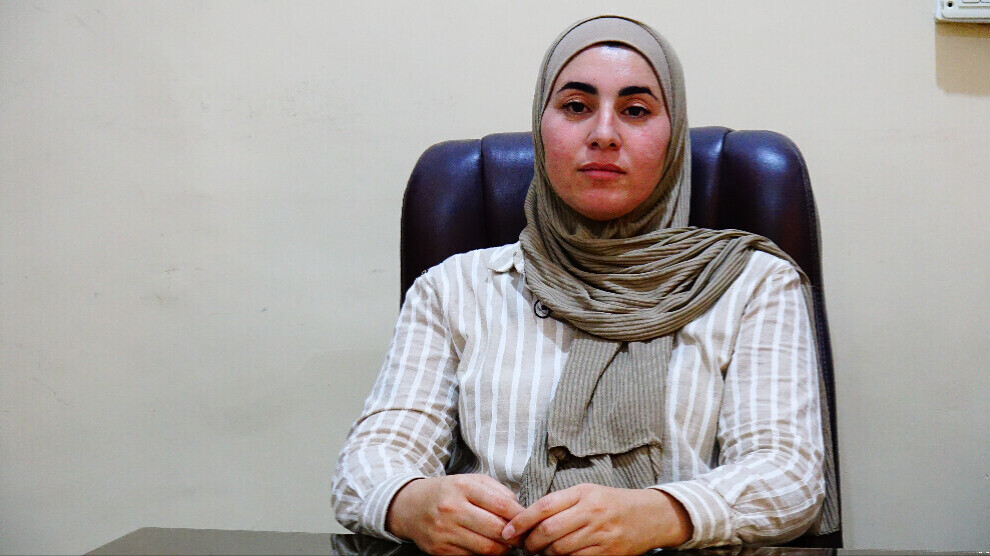
Regarding the importance of women's participation in the political process, Madeleine Obeid, Deputy Co-Chair of the Tel Tamer City Council, said that women's participation in the political process is extremely important for building a peaceful, just, and balanced society.
She added: "Women play a fundamental role in building society, because woman is society itself. The presence of women and their political participation represent an important step, not only formally, but also in terms of real decision-making. Women are capable of understanding family and social problems and children's issues, and conveying them to decision-making centers. Therefore, if the goal is to build a democratic society, women must participate in everything related to governance."
She explained that Syria, after 14 years of war, is going through a new phase of political transition, and expressed hope that women's participation would be stronger than before: "Women's presence around the world has proven their ability to achieve sustainable and peaceful solutions. Their presence within this framework plays a fundamental role in building a more advanced society."
Women Are Capable of Achieving Balance
Madeleine Obeid pointed out that society tries to keep women in the background, even though women are capable of achieving balance within the family and society: "A woman who can build a family is also capable of building a nation, because she possesses the energy and ability to manage and achieve balance across many areas, whether political, social, health-related, educational, or related to human rights."
She believes that the participation of women from all sects and ethnicities in the political process is extremely important: "This participation strengthens greater unity, offers more solutions for the future, and undoubtedly strengthens society."
She continued: "History bears witness to the achievements of Syrian women, from fighters and leaders to teachers, engineers, lawyers, scientists, and doctors. Therefore, they are also capable today of making fateful decisions."
"There Must Be a Fair Balance in Political Representation"
Madeleine Obeid stressed the need for a fair balance in the political representation of women in the Syrian parliament: "We have seen that the proportion of men's representation in parliament is much greater than that of women, even though women are equally capable of holding these parliamentary positions."
On the reasons behind the exclusion of women from the political sphere in Syria, she said: "The marginalization and deprivation of women from their political role is part of an effort to exclude them from politics, as the interim government tries to build an entirely patriarchal society without women's participation. This also prevents Syria from competing with advanced countries that respect women and their rights and work to empower them, and keeps it from achieving such progress."
She continued: "We see that many women in Syria, including doctors, lawyers, engineers, and even scientists, are being killed. The goal of killing them is to reduce their role in the workplace and public sphere, and to diminish their presence."
What Will Be Lost Without Women's Participation?
Madeleine Obeid drew attention to the exclusion of women and the negative consequences that could result: "Without women's participation in the political process, neither democracy, nor development, nor meaningful decision-making can be achieved. Women have a vision for the future, particularly regarding children, family, health, and education, and without women's political participation, their identity and rights will not be recognized legally, socially, or economically, nor will their role within the family be recognized."
She explained that "Syria has entered a new political phase, and therefore women must participate more broadly in this process, since it is still in its early stages," noting that "at present, women's rights and their role within the political process are being gradually reduced. The fact that the majority of parliamentary seats have been allocated to men reveals the political stance of the interim Syrian government. It is therefore important for the countries involved in the Syrian crisis to intervene to prevent the erosion of women's rights, both now and in the future."
Madeleine Obeid concluded by issuing an appeal to women: "I call on all Syrian women to organize themselves in demonstrations and protests to demand their rights, whether in front of the Syrian parliament or any institution that attempts to marginalize or exclude them."