Children of Kobani Celebrate Culture and Art, Affirming their Right to Learn in Their Mother Tongue
With artistic and musical performances, the children of Kobani, Rojava, celebrated their ninth festival,affirming their commitment to learning in their mother tongue and their pride in their Kurdish culture.
Kobani — The Golden Crescent Movement and the Culture and Art Movement in Kobani, Rojava, organized the ninth edition of the Children's Festival today, Tuesday, September 1, at the Baqi Khado Culture and Art Center.
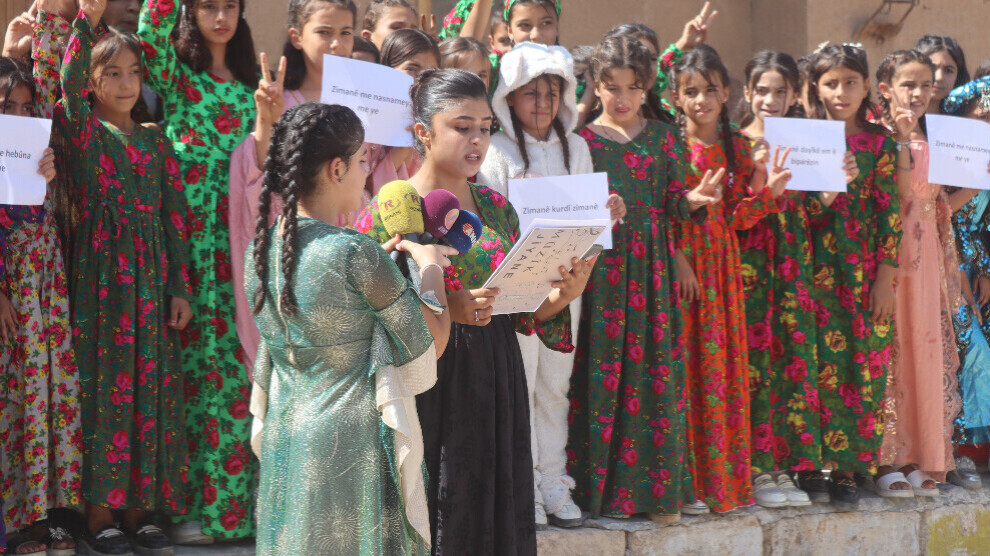
The festival featured musical, theatrical, and artistic performances, along with folk dance (dabke) and singing. Before the start, the participating children read a statement affirming their right to learn in their mother tongue and the importance of a child's connection to their language and culture as essential elements in shaping their personality and identity.
Child Diala Hamza read the statement, which expressed the children of Kobani's connection to their Kurdish culture, stating that culture represents a space for songs, dances, and folk tales passed down through generations, affirming that preserving language and culture is a fundamental right for them.
In the statement, the children emphasized their pride in their culture, demanding that every child receive their right to read and learn in their mother tongue, and to be able to express themselves and take pride in their culture. "Our language is our respect, and our culture is our identity."
In her speech, artist Shirin Ararat said: "Today on the stage of the Baqi Khado Culture and Art Center, we witness the cultural productions of hundreds of our children. This is a great source of pride for us, seeing our children grow up within their authentic culture and history."
She stressed the importance of the role children play in building the future, considering their connection to their culture and arts as one of the essential elements in preserving and developing cultural identity.
The festival featured performances by 11 groups in music, theatre, and dabke, with children taking the stage to present their work before the audience.
Participants presented musical pieces and songs in Kurdish, along with theatrical performances and folk dabke dances, in an atmosphere of enthusiasm and interaction from both the children and their families.
The children appeared in colorful clothing and decorations inspired by Kurdish culture, giving the festival a distinct traditional character, while the performances were accompanied by singing, dancing, and chanting slogans related to language and culture.
A number of participating children expressed their happiness at taking part in the festival, affirming that the arts serve as a means of expressing their identity and introducing their culture.
Lisava Hami said that the children of Kobani participated in the festival to showcase their artistic talents, noting that they presented songs, theatre, and dabke in Kurdish.
She called on children to take an interest in the arts and participate in cultural events, considering that gathering around culture and the arts gives children the opportunity to express themselves and strengthen their connection to their language and heritage.
She explained that she is participating as part of a musical group and presented Kurdish songs during the festival as part of the artistic performances prepared by the participating groups.
"Our Language Is Our Existence"
For her part, Arjin Mohammed, one of the festival participants, said that hundreds of children gathered around culture and the arts to take part in the festival atmosphere and express their connection to their identity.
She stressed that the collective participation of children in cultural events represents, in her words, an affirmation of their attachment to Kurdish as their mother tongue.
She said that children do not want education to come at the expense of their mother tongue, affirming her rejection of receiving education in any language other than Kurdish: "Our language is our existence."
The ninth Children's Festival in Kobani, through its artistic performances, children's participation, and statements, reflects a growing focus on the role of culture, arts, and language in the lives of new generations, turning cultural events into a space where children express their connection to their language, heritage, and identity.