
Child Protection Office: Safe Haven and Comprehensive Care for War-Orphaned Children
The Child Protection Office in the North and East Syria Region is working to launch new projects that nurture children’s talents and ensure them a better future.
Zeinab Issa
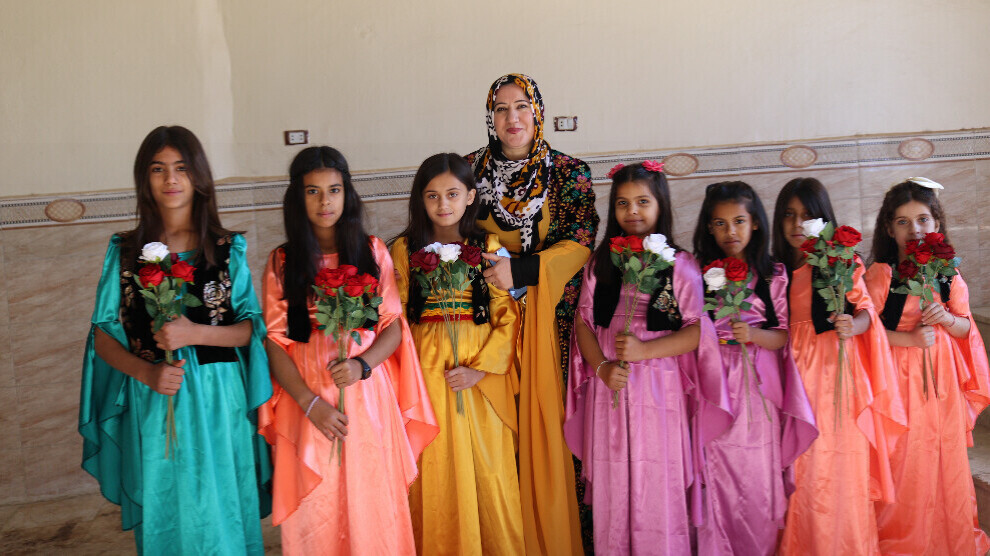
Qamishlo — The Child Protection Office in Al-Jazira Canton provides a safe environment and comprehensive care for children who have lost their parents due to the war, through dedicated homes that focus on their education and provide psychological and social support.
Since 2015, the Child Protection Office affiliated with the Women’s Authority has established special homes for children who lost their parents as a result of the ravages of war, serving as a safe haven that guarantees care and protection. These homes offer comprehensive support and a calm atmosphere that helps children learn and grow despite the harsh circumstances they have endured, allowing their lives to begin anew within this shelter. They are also given a second chance to achieve their dreams within the framework of protection provided by the Women’s Authority.
Nodam Shiro, an administrator at the office, explained that the aim of establishing these homes is to ensure a dignified and stable life for orphaned children. She said:
“With the launch of the Rojava Revolution, many battles erupted across the regions of North and East Syria. During those years, many children were left without a mother or a father after their parents were killed in the war, and they no longer had a safe place to turn to. In order to secure a stable environment and a better future for them, we established a children’s office under the supervision of the Autonomous Administration and the care of the Women’s Council, to serve as a safe haven for them.”
She added, “Every child who comes to us has a different background in terms of language, culture, and even skin color, which made the beginnings difficult. It was not easy for a child to accept a stranger as a substitute mother or to consider this place their new home.”
The Office Works to Develop Children’s Talents
She pointed out that literacy programs are provided to children within the office, and that they are raised on the principles of a democratic society. “The greatest responsibility in the children’s home falls on the administration and educators, as children need to relearn the foundations of life, order, and upbringing,” she explained, noting that “the home employs 42 staff members who carry out various tasks, from education to cleaning, in addition to training children in social skills and behavior.”
She further clarified that the children have been enrolled in education: “There are currently 42 children learning to read and write. Various educational and recreational activities are organized for them, and continuous educational programs are provided, alongside seminars aimed at improving their psychological well-being.” She emphasized, “We are keen to implement diverse activities that help children grow with sound intellect, teach them basic principles, and raise them on the values of a democratic society. At the beginning, we introduce them to their culture and identity.”
She noted that the coming phase will witness the launch of many projects dedicated to children. “The children’s home is not limited to housing orphaned children only; there are also children who were left without care due to family problems, leaving them homeless. We receive them and provide them with a safe place,” she said. She added that “in cases where family problems are resolved, children are returned to their families in an organized manner, while children whose cases remain unresolved stay with us until they reach the age of eighteen, after which they determine their own future.”
Nodam Shiro concluded by saying, “We strive to implement multiple projects to support these children. Many of them possess talents and abilities that need someone to support and bring them to light. Our goal is that no child is deprived of their rights and that we provide them with the best possible opportunities, as they represent the future of our society.