
After the July events… women of Sweida discuss decentralization and independence as an option for safety
Amid Sweida's profound transformations, activists' testimonies reveal a changing mindset, declining trust in the center, and rising debate on local protection and decentralization, with violence leaving deep social and psychological scars.
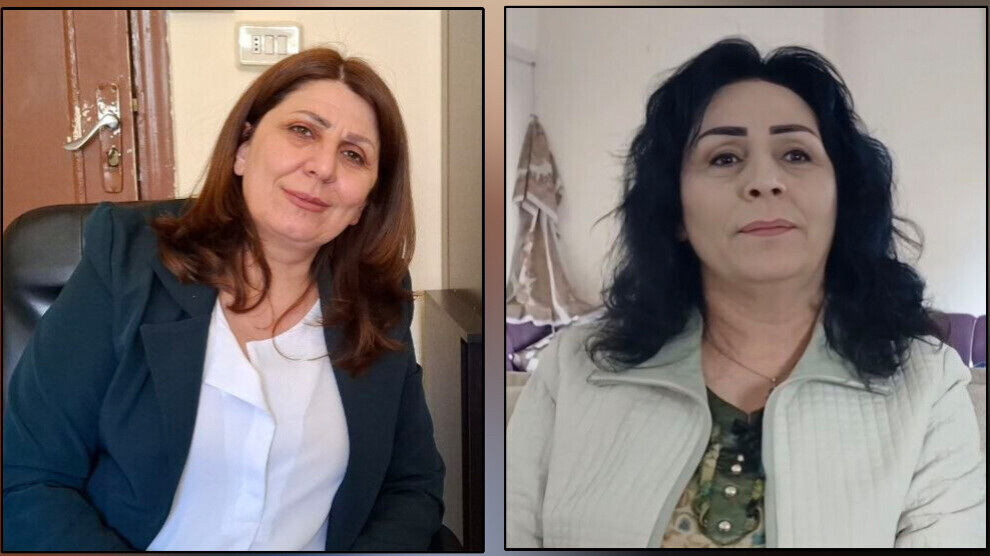
Roshel Junior
As-Sweida – Women from Sweida have affirmed that the idea of expanded decentralization, or even independence, has today become closer to the aspirations of a wide segment of the population – not stemming from a traditional political project, but as a result of a growing feeling of lost security and trust, following the July events and the accompanying killing, violence, and deep social divisions.
Many believe that what happened over the past months has changed residents' view of their relationship with the Syrian interim government, pushing them to rethink the form of political and security administration that could guarantee stability and preserve the specificity of the local community.
The shock of belonging and the loss of trust
Lawyer Radina Al‑Khatib says that the people of Sweida initially received the political change in Syria with "some hope," despite their awareness of the intellectual backgrounds of the forces that came to power. However, this hope began to gradually decline after the coastal events and the ensuing tensions and sectarian rhetoric in Syrian universities, culminating in the July events, which, in her description, constituted a "shock at the level of belonging."
She explains that many residents felt that the idea of national partnership had suffered a real collapse after the scenes of violence, killing, and displacement that accompanied the entry of security forces into Sweida, in addition to a widespread sense of betrayal due to the absence of popular solidarity or serious demands for accountability.
She adds that the state of fear and isolation has pushed a large segment of the population to think about new forms of relationship with Damascus, considering that the presence of security forces no longer gives residents a sense of security; rather, it has become associated with fear and anxiety after recent experiences.
Decentralization as an option for protection
Radina Al‑Khatib believes that the general mood within Sweida has clearly shifted toward the idea of expanded local administration or self‑governance, allowing the people of the region to manage their political, educational, and security affairs away from the central authority.
Although she acknowledges that the idea of complete independence seems complex and tied to international balances, she affirms that the debate about it is now strongly present within society, especially among new generations who grew up amid war and hate speech, and have become less convinced of the possibility of returning to the previous form of shared life.
She also warns of the repercussions of the current situation on women and girls, especially after the transfer of examination centers and universities to areas outside Sweida, considering that the continuation of these conditions could lead to a decline in educational and employment opportunities for women and increased social isolation.
The discourse of the civil state
For her part, political activist Samahar Al‑Andari believes that "the positions of Sheikh Hikmat al‑Hijri cannot be separated from the profound transformations Sweida has experienced in recent times," affirming that he was "among the first religious voices to call for the establishment of a democratic civil state based on citizenship and the separation of religion from state institutions," which she considered evidence of the nature of the social and political environment in Sweida, which believes in the civil state and pluralism.
She explains that the accusations directed at al‑Hijri of separatism or collaboration were not based, in her opinion, on actual statements, but came as a result of some people's rejection of any discourse calling for a civil state outside prevailing traditional frameworks.
She says that the greatest shock for the people of Sweida was not only the scale of violence and violations, but also the silence or indifference they felt from wide sectors of Syrians, despite what civilians suffered in terms of killing, kidnapping, and violations, leaving a deep psychological impact, especially among young people and students who faced incitement and sectarian rhetoric in universities and on social media.
She added that this reinforced in many a sense of local belonging and social and religious identity, after feeling that they were targeted or unwelcome in spaces that were supposed to be inclusive of all Syrians.
Coexistence and rejection of exclusion of others
Samahar Al‑Andari affirmed that society in Sweida is not based on the exclusion of others, pointing out that there is a Sunni component and a Christian component living within the social fabric of the city, and that residents still believe in coexistence, citizenship, and respect for diversity, considering that what unites the people of Sweida is the idea of community partnership, not sectarian isolation.
She also considered that women were among the most affected groups by the events, but they played a pivotal role in maintaining social cohesion during periods of siege and crises. She explained that women in Sweida have borne double responsibilities in securing family needs and adapting to difficult economic and living conditions, which reinforced their sense that they are fundamental partners in social and political life.
Local security and the spirit of community organization
She also spoke about the growing manifestations of self‑reliance within Sweida, through the expansion of agriculture, poultry farming, and small community initiatives, aiming to achieve a state of self‑sufficiency, in addition to afforestation, cleaning campaigns, and volunteer work that have spread in recent times.
She pointed out that Sweida has developed local forms of organization and community management, such as the national guard and civil initiatives, which has reinforced residents' sense of their ability to manage their own affairs.
From the city to the idea of an "entity"
Samahar Al‑Andari believes that talk of decentralization or self‑governance has become for many not just a political slogan, but linked to the protection of the local community, the preservation of dignity and stability, and the prevention of a recurrence of the violations the region witnessed.
She said that what Sweida is experiencing today has created a feeling among some residents that they have an "entity" capable of organizing itself and managing its affairs, even if it is not an independent state, considering that this reflects a development in the experience of local self‑administration and the spirit of community cooperation within the city.