
Afghan Women Under Threat... Forced Marriage as Another Face of Repression
Reports from Afghan provinces reveal educated women and girls face threats, arrest, torture, and pressure to force marriage to Taliban members.
BAHARAN LAHIB
Kabul — Since the Taliban's return to power, reports have proliferated from different Afghan provinces stating that members of the movement seek to marry educated women, often choosing them as second, third, or fourth wives. Afghan women say with bitterness and sarcasm that "the Taliban has banned girls' education, yet at the same time forces educated women, through threats and coercion, to marry its members or their relatives."
Looking at villages or what is circulated on social media, many accounts emerge of women being forced into marriage with Taliban members. Among the most prominent cases is that of "Abida," a 20-year-old woman from Ghor province, who set herself on fire on April 27, 2025, to escape forced marriage to the brother of a Taliban leader, and later died from her injuries.
Among the shocking cases is also the testimony of Elaha Delawar Zadeh, daughter of a former government official, a second-year medical student, and one of the women who participated in protests. In a video she posted on July 5, 2023, she said that "Saeed Khosti," a Taliban official, raped her while she was detained and then forced her to marry him. After she fled to Pakistan, Pakistani authorities returned her to the Taliban, where she spent five months in prison, was tortured, and was only released after a large sum of money was paid. She later sought refuge in a European country.
In another case, Bibi Sadiqa, a young woman from the Bala Murghab district of Badghis province, has been in prison for over two years for refusing to marry a Taliban member, a 70-year-old man named Khuda Nazar with three other wives. According to local sources, she was given the choice between marriage or prison, and she chose prison over forced marriage.
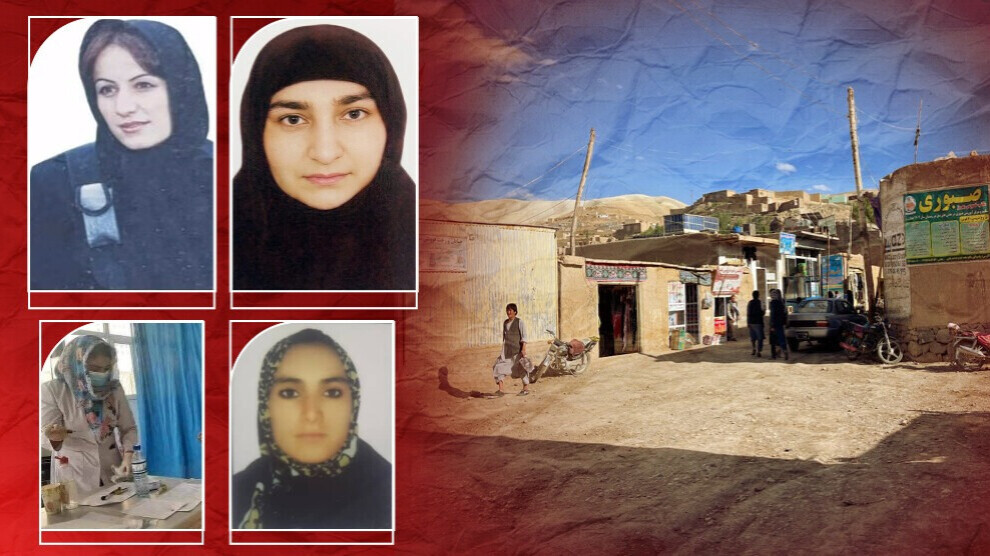
On May 8, 2026, Jemen Hossein Zadeh and Sara Yousefi, 15 years old, were killed in the Kohistanat district of Sarpol province. Information indicates that Jemen, originally Kurdish from Bukan in East Kurdistan, had married an Afghan man about twenty years ago and moved to Afghanistan, where she was known among residents as "Bibi Jamen Gul." According to witnesses, Mufti Mohammadullah, an official in the Taliban's Hajj and Endowments Department in the province, proposed marriage to Sara, but after her refusal and her mother's refusal, he shot and killed them.
Hundreds of other women and girls have likely been forced to marry Taliban members, but their stories have not reached the media, and their suffering is no less than that of Elaha, Abida, Jemen, Sara, or Sadiqa.
On June 23, 2026, Dr. Gulali was killed inside her home in the Surkhrod district of Nangarhar province. As with many similar cases, the Taliban described the crime as mysterious, claiming that armed men broke into the house at night, tortured her, and strangled her to death. Her father also suffered a broken arm in the attack.
However, local witnesses provided a different account, confirming that Gulali, who worked at a government clinic, had repeatedly complained of harassment and inappropriate marriage proposals from Taliban members and had constantly refused them. One of her family members reported that a Taliban leader had proposed to her via voice message days before her killing, and when she refused, he attacked her home at night.
As in other cases of women's killings, the Taliban forced Gulali's father to confess that the crime was the result of a personal vendetta. Witnesses say her father, who worked as a fruit vendor, has since suffered from severe psychological disorders.
During the preparation of this report, our agency conducted interviews with two female doctors working in different hospitals in Kabul and Sarpol, both of whom confirmed that female doctors are subjected to repeated pressure to force them into marriage with Taliban members working in the hospitals.
Testimonies Reveal Taliban Violations Against Women
Rana Wali, a doctor at one of Kabul's hospitals, said: "I myself witnessed a Taliban official supervising doctors' work forcing one of my young colleagues to marry him, to become his fourth wife."
She added: "My colleague Sharifa Siddiqui was a lively and ambitious girl, but she suddenly became withdrawn and silent. When we asked her mother, who works as a cleaner at the same hospital, she told us in tears that a Taliban official had threatened to kill her son if the family did not agree to marry her daughter to him, so they were forced to accept."
She explained that Sharifa's mother lost her husband during the first Taliban rule and raised her two children with difficulty until they completed their education, but she was eventually forced to agree to this marriage to save her son's life. "It is said that this Taliban member has four other wives."
For her part, Dr. Zakiyah Rahmani, who previously worked at a hospital in Sarpol province, said she was forced to leave her job and flee the province due to Taliban threats. "Although I was engaged and was due to leave in a few days to London to join my fiancé, a Taliban leader sent a proposal for my hand. My family told him I was engaged, but he refused, saying my fiancé was not here and I should not wait for him."
She noted that "after repeated threats, I was forced to leave my work and home and take refuge in Kabul. Now I and my parents and my two younger brothers have decided to leave Afghanistan, because I fear he will find me even here."
In reality, women in Afghanistan suffer not only from deprivation of education and work but daily face the risk of arrest on charges of "bad hijab," public flogging, forced marriage, violence, and multiple other forms of repression. According to human rights activists, Afghan women today live under the weight of a system based on discrimination and structural violence, facing multiple intersecting forms of oppression.