
A Humanitarian Catastrophe Threatening 42,000 Displaced People in Geisan and Blue Nile
The Civil Society Initiative in Blue Nile State warns of a worsening crisis threatening 42,000 displaced people in Geisan and Ethiopia border areas, amid food and water shortages.
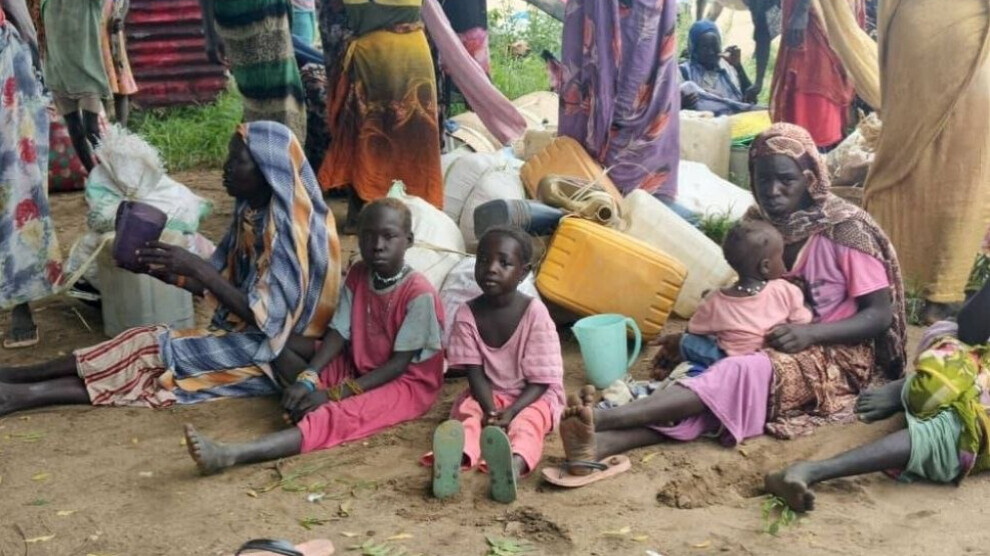
Sudan — The humanitarian situation in Sudan is deteriorating as basic services collapse, with thousands of families facing acute shortages of food, healthcare, and shelter, due to the expansion of the conflict that has continued for years, leaving catastrophic repercussions on the population.
As the conflict in Sudan continues since April 15, the Civil Society Initiative in Blue Nile State has warned of an imminent humanitarian catastrophe threatening the lives of nearly 42,000 displaced people in the city of Geisan and the border areas with Ethiopia, including more than 24,000 children and 11,000 women, living in the open amid acute shortages of food, water, shelter, and healthcare.
The initiative said in a statement yesterday, Thursday, September 17, that the humanitarian and health conditions are deteriorating rapidly, amid major difficulties facing the delivery of aid and basic services to those affected.
This warning comes at a time when Blue Nile State has turned in recent months into a raging conflict zone, with military operations escalating between the Sudanese Army on one side, and the Rapid Support Forces and the Sudan People's Liberation Movement–North on the other, especially in the areas of Karmak, Geisan, and their surroundings, causing successive waves of displacement.
The initiative explained that the total number of displaced people in the areas concerned reached 42,271 individuals distributed across 3,803 families, including 24,266 children, 11,713 women, and 6,463 men. According to the statement, the displaced are distributed across Sansanao with 7,080 people, Famoudou/Abu Daqla with 24,836 people, Agrou/Agou with 6,549 people, and Qal Inq with 1,488 people, in addition to 2,318 displaced people who fled to areas inside Ethiopian territory.
The initiative pointed out that a large number of the displaced, most of them women and children, are living in the open in conditions lacking the most basic necessities of life, warning of worsening conditions with the arrival of the autumn season and its accompanying heavy rains and difficulty of movement and access to the affected areas.
It cautioned that the deterioration of health services, along with the acute shortage of food, drinking water, and shelter, increases the risk of the spread of water-, environment-, and mosquito-borne diseases, warning in particular of rising malnutrition rates among children and its serious repercussions on women and the elderly.
The statement affirmed that the areas concerned are under the control of the Sudan People's Liberation Movement–North and its ally the Rapid Support Forces, amid the continuation of the conflict and the difficulty for humanitarian organizations to reach civilians.
The initiative called on all parties to the conflict to take urgent steps to facilitate the delivery of humanitarian aid and health services to the displaced, and to work to limit the deterioration of humanitarian conditions in the affected areas.
The International Organization for Migration had recorded the displacement of about 99,277 people from various areas in Blue Nile during the period from January 11 to August 23, including 39,570 people displaced from the city of Geisan, 32,515 from Karmak, and 27,192 from Bau, with the majority of them heading to Damazin, Geisan, Bau, Wad al-Mahi, and Roseires.