
Women making history…the mother’s role in shaping the consciousness of leaders
In Kurdish and world history, great leaders came from mothers who broke submission, preserved identity and dignity, becoming a psychological fortress and source of pioneers and leaders in society."
Hevi Salah
Sulaymaniyah – Raising a child by a brave, decisive mother who criticizes rigid customs and restrictive traditions leaves a fundamental impact on the child’s personality. The child learns self-confidence and independence through observing the mother’s actions, not just through verbal advice.
This type of mother creates an environment in which the child grows with their own identity, learns to ask questions, and seeks truth. A mother who is accustomed to saying “yes” to everything produces only a submissive person. The mother’s regusal to submit is not destruction of the family; it is the foundation for building a healthy family. As long as the mother is restricted, she cannot raise a generation capable of leading their nation and people toward freedom.
Beyond the concept of submission
In closed societies, the image of the ideal mother is often reduced to obedience and perpetual silence. This perception has led to raising many generations on dependency and submission. However, the history of social transformation has proven that great leaders were raised by mother who knew how to defend their rights and how to say “no” when necessary.
When a mother can defend her rights and rebel against the constraints that bind human will, she indirectly teaches her child courage. These are the qualities a leader and pioneer needs, because leadership requires strength to change reality, not surrender to it. In contrast, a woman who only says ‘’yes” raises a fearful or submissive child, incapable of creativity when needed.
Balance between courage and upbringing
To achieve balance, the mother should be a model of courage while at the same time leaving her child free space to express their opinion. The first step is respecting the child's differing opinion. Second, the mother's freedom should not turn into a new dictatorship; rather, she should use her strength to protect justice. It is also very important for the child to see the mother apologize when she makes a mistake, because that teaches responsibility.
The father's role: supportive or obstructive?
The father's role in this equation is like a double‑edged sword. If the father is open‑minded, he becomes the greatest supporter of the mother's freedom. But if he tries to keep his wife within the framework of obedience only to please society, he also hinders the child's personality development. Then, the child thinks that strength is exclusive to one gender, which produces an oppressive or oppressed generation.
When the child sees that the mother has an opinion in front of the father, the value of equality is born. If the child is a daughter, she sees in her mother a model of independence; if a son, he learns to respect women's will. These children are more courageous and intelligent within society because they were raised in the school of a brave mother and an understanding father, learning life's balance, not just the execution of orders.
Facing social pressures
In closed societies, such families face many pressures, such as social isolation, labeling the child as rebellious, or even accusing the father of weakness. Here, the mother must be a safe psychological refuge for her child, teaching them that difference is strength, not a flaw. The mother becomes a shield protecting her child's personality from the arrows of toxic criticism.
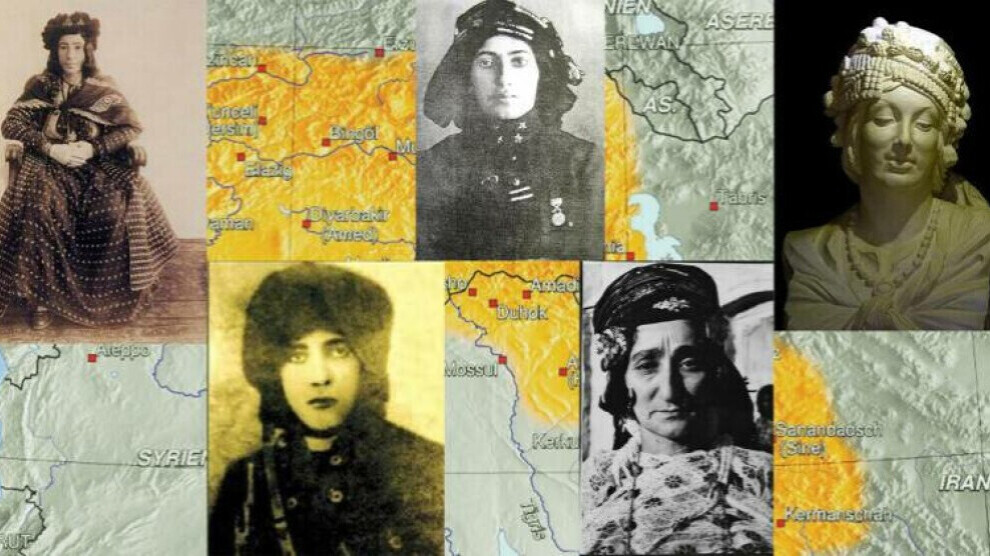
For this vision to become reality, the home should become a small school of freedom through adherence to rights. Children should see their mother steadfast in her rights. Teaching the child criticism and dialogue, even with their parents, giving them confidence to make small decisions and take responsibility for their mistakes, in addition to introducing them to the history of pioneering women such as Mother Awiş, Adela Khanum, and Mother Kuli to bring them closer to the meaning of courage, and making honesty the basis of relationships instead of fear, because fear creates slaves, while respect creates people of will and decision.
Mothers as sources of leadership in history
Mother Awiş: She was a source of inspiration for leader Abdullah Öcalan, instilling in him a spirit of rebellion and self‑reliance.
Mina Khanum: She was not only a mother to her children; she was also known as the "Mother of Kurdistan." She was the first to establish the "Kurdistan Women's Union" in 1945 and encouraged mothers to send their daughters to schools.
Hafsa Khan al‑Naqib: She opened the first girls' school in her home in the city of Sulaymaniyah, Kurdistan Region, and wrote a letter to the League of Nations demanding Kurdish rights. She was not only a mother to her family but a mother to all educated people.
Adela Khanum: She was a strong, decisive woman, known as the head of the Jaf tribe and the ruler of the Halabja region. In an era of male dominance, she ran courts, markets, and prisons, restoring security and stability to the region, remaining in people's memory as both a loving and strong mother.
Mastoureh Ardalan: She is considered the first female historian in the Middle East. At a time when history writing was exclusive to men, she wrote the history of the Ardalan Emirate, proving that Kurdish women possess strong thought and pen.
Margaret George: Known as the first female Peshmerga to bear arms, she became a symbol of sacrifice and paved the way for thousands of Kurdish women to participate in armed struggle, affirming that Kurdish women are capable of leadership even on the toughest fronts.