
More Than Nine Decades Later... Law 58 Between Revolutionism and Shortcomings
Despite its revolutionary character, demands are renewed for the implementation of Law 58 of 2017 to combat all forms of violence against women in Tunisia, and demands for amendments related to femicide and cyber violence are surfacing.
TUNISIA – Organic Law No. 58 of 2017 represents a historic gain for the feminist struggle in Tunisia. Despite its legislative revolutionary character, it today faces obstacles in judicial application and complex structural deficiencies, coinciding with human rights fears of a regression in women's gains under the current political circumstance and a notable escalation of the femicide phenomenon.
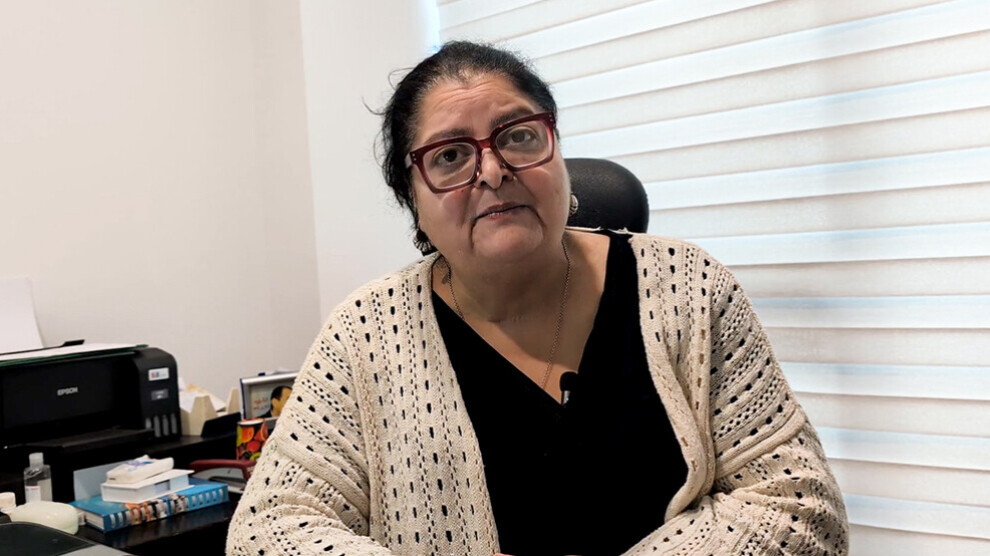
Organic Law No. 58 of 2017 on eliminating violence against women approaches its tenth year amid difficulties and obstacles that sometimes prevent women from accessing justice. Raja Al-Dahmani, president of the Tunisian Association of Democratic Women, confirmed that this law represents a real gain and victory for feminists in Tunisia and for women as a whole.
She explained that this achievement came as the fruit of long years of feminist and women's struggle since the national movement period and before. She noted that the phenomenon of violence against women was initially not officially recognized as existing in Tunisia, and its numbers were subjected to obscurity, but women's associations and the human rights system worked for a long time on this issue and carried out many campaigns to condemn it until those efforts were crowned with the issuance of the 2017 law.
The Revolutionary Nature of the Text in the Face of Judicial Application Obstacles
Raja Al-Dahmani added that Law 58 is considered a real revolution in the field of women's rights at the level of legislation, because even in its definition of violence it was more comprehensive and broader than the definitions contained in international covenants, especially the United Nations definition. It was distinguished by precision in diagnosing and defining forms of violence and delving into its precise details. However, today, after a full decade since the emergence of this law, a major obstacle has been observed in the extent of its field application, according to her statement.
She explained that the Tunisian judiciary did not absorb at its beginnings the extent of the revolutionary nature of this law and considered it a text very advanced for society and difficult to apply. She stressed that they as civil society rejected this approach within the judicial system, especially since they noticed that some sometimes resorted to adopting previous laws and turned away from activating the officially issued law. "As long as the law has been officially issued, it is binding for immediate application."
She noted that they launched many campaigns to demand a review of these procedures and their application within courts, in addition to continuous follow-up of prevention mechanisms.
Specialized Units and Non-Recognition of Marital Rape
Regarding the mechanisms for caring for women at various stages, Raja Al-Dahmani noted that they waged campaigns even for financial support, stressing that this law is difficult to achieve if an important and earmarked budget is not allocated to it by the government.
She confirmed that the most important point was the organization of "specialized units" that women victims of violence turn to in various regions of the country for awareness and requesting protection. However, these units remain extremely deficient in relation to the "training" directed at security elements (men and women) on how to deal with victims, defend them, and have precise knowledge of the law's articles and working mechanisms.
She added that unfortunately, even when a certain group is formed and transferred many times, "we find ourselves before other people who have not received this training." Thus Law 58 remains fraught with deficient parts, most notably the absence of explicit stipulation of "marital rape," even though in Tunisia it is considered a crime and must be criminalized in the law, in addition to the absence of stipulation of "digital violence" despite its enormous numbers today in Tunisia, which constitute a real danger to women, girls, and children, not to mention the existence of shortcomings in protection and care mechanisms despite their theoretical mention.
The Femicide Phenomenon and Fears of Regression Under a Complex Political Circumstance
Raja Al-Dahmani noted that Law 58 also did not address the issue of "femicide" or gender-based killing, as it dealt with murder crimes as felonies in isolation from their dimension related to the fact that the victim was killed merely because she is a woman.
She explained that they in the association, alongside other associations, monitor and follow up on these crimes in the field in the absence of any official figures issued by the government to date.
In this context, she revealed terrifying figures: 26 murders were recorded in 2024, and the situation worsened in 2025, and disturbing indicators continue during 2026, with assessments recording more than 30 murders extending from 2024 to 2026.
She considered that this number is very high and a dangerous and terrifying indicator for Tunisian society, especially after 70 years of independence, the Personal Status Code, and women's struggles.
Raja Al-Dahmani confirmed that despite the existence of many shortcomings in this law and their desire to review it to address them, there are real fears of merely opening the door to review at the current time, given that the law was issued in a revolutionary path simultaneous with the decade that preceded the 17 December–14 January revolution, which represented a period of important legislative and rights prosperity.
She explained that they are living today in a complex political circumstance in which threats can be observed that may affect these gains in depth, especially with a previous regression from laws and decrees fair to women. She considered that any infringement on Law 58 today represents a real danger warning for women's rights and gains in Tunisia.
In a related context, Raja Al-Dahmani stressed that women's gains and rights are considered an utmost priority and a highly important issue requiring protection and fierce defense at this particular stage. She confirmed that this keenness to protect existing gains does not prevent at all the continuous demand for reviewing some discriminatory provisions that women still suffer from in the legislative system and reality.
Closing the Headquarters of the National Union of Women "Violence Targeting Women"
Raja Al-Dahmani, president of the Tunisian Association of Democratic Women, denounced the closure and sealing of the office of the president of the National Union of Tunisian Women, describing the measure as violence against a long-standing organization that accompanied the country's independence. She also condemned the cutting of state funding for it, which led to depriving its employees of their wages for two years and preventing them from health coverage, considering this an unjust punishment and a blatant violation of their economic and social rights due to accumulated violations from previous years.
She announced her rejection of burdening employees with the consequences of past violations of a long-standing organization, considering that depriving them of wages and healthcare is an assault on their right to life, and a new link in the series of striking civil society and restricting intermediary bodies. She stressed that these structures do not constitute a danger to the state, but rather represent a fortress and refuge for citizens.
At the end of her interview, Raja Al-Dahmani confirmed the association's absolute and unconditional solidarity with the National Union of Tunisian Women, expressing her hope that this injustice and suffering will be lifted from the employees and workers as soon as possible.